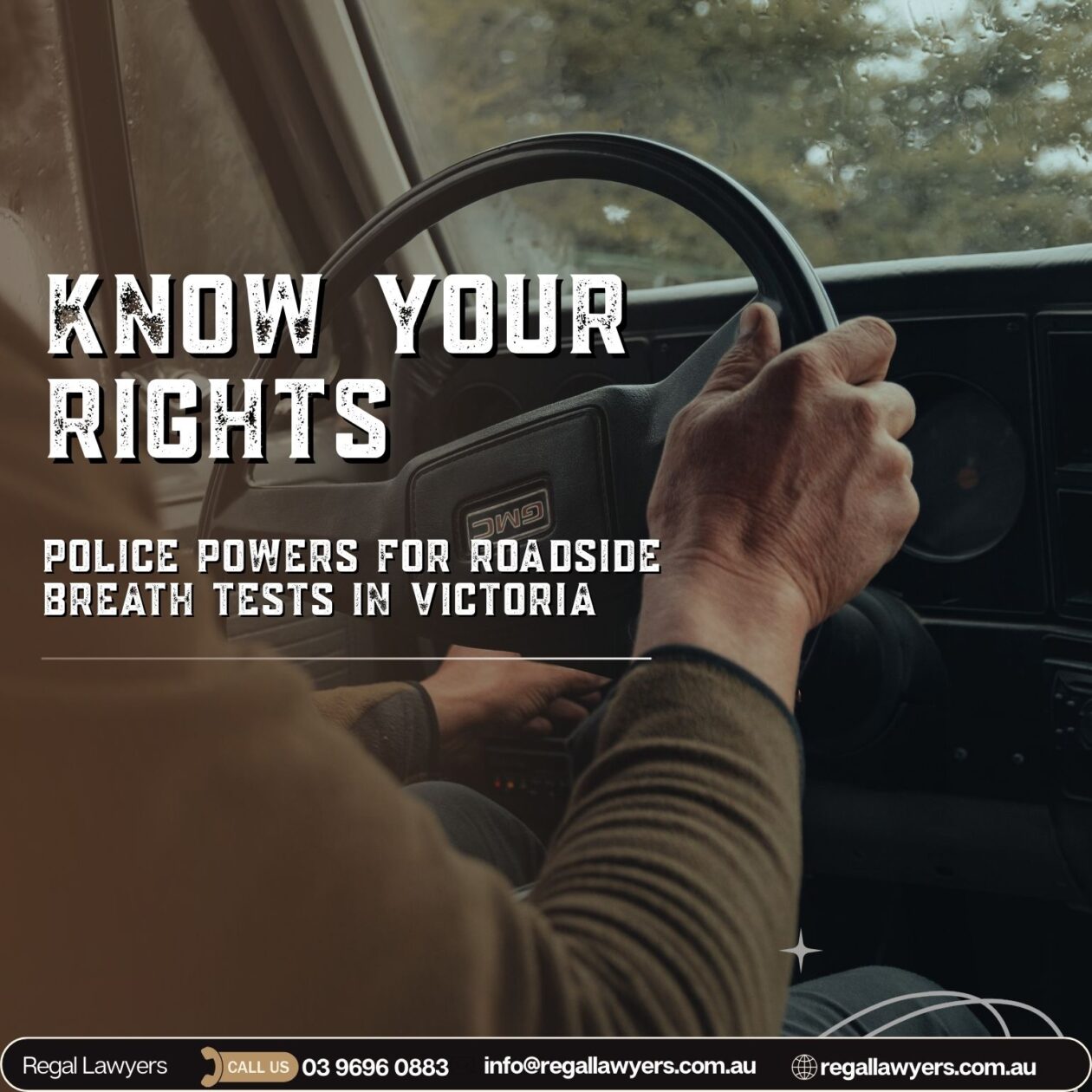
The festive season is approaching, and the last thing you would want is a breath test that can ruin your evening mood. Whilst roads across Victoria become busier than usual, law and order also take the front row seat. Family gatherings, office parties, late-night celebrations, and holiday travel mean more cars on the road and a stronger police presence. Whilst random breath tests are a familiar sight this time of year, many drivers are still unsure about what their rights are and what the law actually allows the police to do.
Sudden RBTs can take you aback, especially when it’s your first. But the honest solution is to simply cooperate with the police officials and know where your rights begin. Understanding how random breath testing works and where the limits of police power lie can help you stay informed and confident if you’re ever stopped. Knowing your rights doesn’t mean avoiding responsibility; it simply ensures you’re treated lawfully and fairly.
A Random Breath Test: What Is It?
An authorised breathalyser is used by police to perform a roadside test known as a random breath test (RBT). A breath sample can be requested from any randomly chosen driver. The test’s objective is to measure the amount of alcohol in their breath.
You may be charged with drunk driving if your blood alcohol content (BAC) is higher than the legal limit or if you refuse to take the test when asked.
Can You Refuse to Take a Breath Test?
Refusing to submit to a preliminary breath test (PBT) when legitimately ordered to do so by police is illegal under section 49(1)(c) of the Road Safety Act 1986 (Vic). This clause forbids drivers from evading the penalties associated with driving while intoxicated by merely refusing to take the test.
Practically speaking, this implies that even if alcohol is later shown to be present, refusing to comply with a police request for a breathalyser test could result in penalties.
Powers of Police
The police have extensive powers to administer preliminary breath tests. Under s53(1)(a) of the Road Safety Act 1986 (Vic), police officers may require anyone merely driving a vehicle to undergo a preliminary breath test. This power is significant as it does not require the police officers to have any reasonable suspicion to order such a test.
Moreover, per s49 (1)(c) makes it an offence to refuse a preliminary breath test. This is an incredibly broad power, where its scope reaches into police, even testing on private property. Coupled together, these laws essentially empower the police to pull drivers over and order them to undergo a preliminary breath test without the driver having a right to refuse. At first glance, it seems worrying that drivers may not be able to protect themselves from these wide powers. However, some limitations to these laws exist.
Limitations of Police Power: Protecting Your Rights
The main limitation to the police powers of RBTs is that they can only be used to ascertain whether someone is under the influence of drugs and/or alcohol whilst driving. Police cannot use this power to conduct searches for other offences. This was confirmed in the case of R v Arthur [2018] SADC 116, where McClintock DCJ found the presence of ‘an extraneous purpose’ would invalidate the establishment of a breath testing station.
The main safeguard of your rights in relation to RBTs comes in the form of the ‘three-hour rule’ of s49(1)(f) of the Road Safety Act 1986 (Vic). Any sample taken by the police must be taken within three hours after driving or being in charge of a motor vehicle. This means the police cannot just order a sample at any given time and attempt to charge you with an offence.
Whilst certain medical exceptions do apply, often the Police will have other measures, such as drawing a blood sample, to work around any medical conditions or exceptions that may apply.
The Final Thoughts
Particularly during the holiday season, random breath testing is crucial to maintaining the safety of Victorian roads. Although police have a lot of authority in this area, it is not unrestricted. The law establishes protections about time and purpose as well as explicit restrictions on how and why breath tests may be performed.